Day 2: Into the Amazon
December 28, 2021
I wasn’t sure what to expect from an internal flight in Peru. Would it be modern and safe or would it be a white-knuckle, stomach-turning, prop plane transporting us over the Andes? To my pleasant surprise, LATAM Airlines operated the flight and it was, in fact, very modern and safe. It was no different than going from Denver to Dallas on Delta in the US.

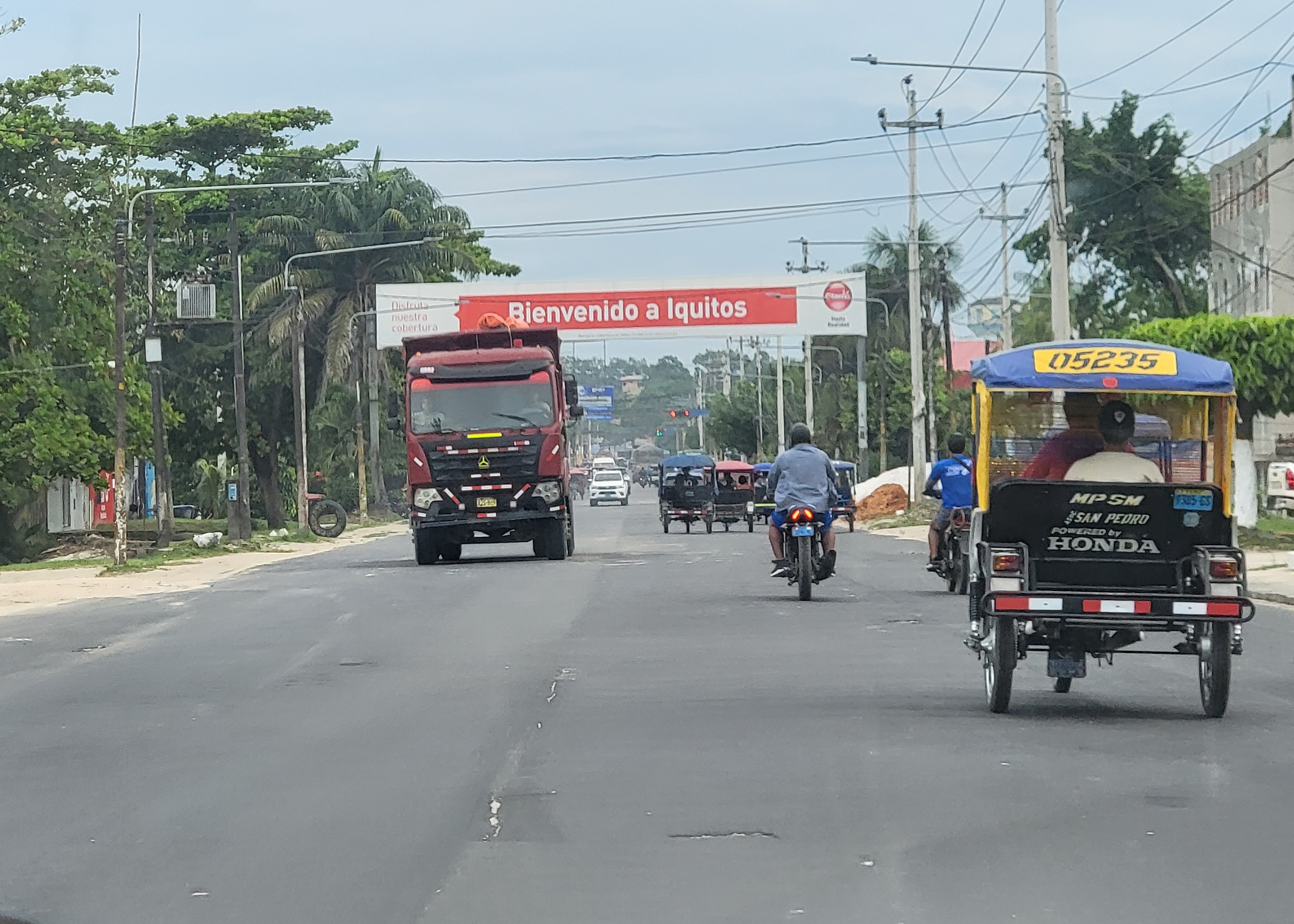
We flew from Lima to Iquitos, which rests on the banks of the Amazon River. In a matter of minutes we transitioned from stunning views of snow-capped Andes peaks out the window to cloud-shrouded Amazon rainforest below. We deplaned on the tarmac at the Iquitos airport. The air was hot, heavy, and steamy.

Vultures wheeled in the sky and squadrons of parakeets and parrots noisily surfed the treetops. We met up with our local guide, Moises and after a quick breakfast at Plaza Jose Abelardo Quinones, we drove to the Allpahuayo-Mishana National Reserve. This reserve is located southwest of Iquitos and encompasses roughly 242 square miles of varied Amazon habitat.


We tossed our bags in the spartan sleeping quarters at the reserve HQ and geared up for an afternoon of birding. It was around this time when Day 3 of our journey started to go sideways. When you’re told it is a half mile or so walk to the trail, in Peru that means take a lot of water because it is several miles away. If you’re told it is a 30 minute walk, take a tent. The four of us, often flanked by several local dogs, marched up the shoulder of the asphalt road for what must have been 45 minutes before we actually got to the trail we were going to bird on. We were hot and sweaty and had already put a dent in our water supply. Moises led the way with a machete, hacking us through several spots that had become overgrown. We were definitely seeing some birds, but mostly just hearing them. Birding and photography in the jungle is a challenge in itself. It is so dense that a moving bird disappears from view in the blink of an eye, if you can even locate it in the first place. Birding by ear is the best approach. Let your ears (or more importantly your local guide’s ears) lead the way. Both Dave and I have been birding in the tropics before but today’s birding was starting out as a higher level of difficulty. I sort of longed to be back on the road where I could at least see some birds perched on snags, wires, bare branches, etc. In this white sand rainforest, it was super challenging. Then it started raining. We donned our rain gear and stowed our sensitive camera equipment away in our packs. We hunkered under some big leaves until it stopped. After this, Moises led us in a different direction. We did some bushwhacking and followed some little rivulets of water down the hill, crossed a small stream, walked up a hill, and repeated. I heard a Mouse-colored Antshrike singing in the nearby jungle and was excited that I had remembered this sound from a previous trip to Ecuador. We pressed into the understory trying to see the bird. Suddenly I felt like I was being repeatedly shocked with lots of low volt electricity. It was more painful than the static shock you get from the light switch after you’ve been walking on the carpet in your socks, but less painful than sticking your finger in a light socket. All of us were being stung by wasps whose nest we’d disturbed as we pushed through the brush up the narrow trail. We all bolted away from the nest and up the trail, the discomfort almost immediately ending as we cleared the area. After a bit more walking, we emerged into a clearing where there were a few buildings. Free of the dense vegetation and canopy overhead, birds were more visible. Flycatchers, woodpeckers, barbets, and jacamars made up part of the contingent. I walked around the clearing, snapping pictures. I came upon one tree that was full of bird activity. It had tanagers, barbets, oropendolas, honeycreepers, and stuff I had no idea about. I called Dave and Pancho, needing more eyes to figure everything out, but they weren’t in sight. I backtracked over towards the buildings and found Dave sitting on a bench there. He had lost his glasses and thought possibly when he was swatting at wasps in the jungle he knocked his glasses off. This was no small matter. He didn’t have a spare pair and he DID need them. They weren’t just readers that he could potentially get along without. We discussed where we’d be able to replace them on this trip and how much it would cost. Would there even be a possibility of replacing them? As a group we decided we should at least backtrack and see if we could find them. I figured there was no chance in hell we’d ever find them. Crestfallen, we worked our way back to the spot of the wasp attack. I heard a Mouse-colored Antshrike singing again and said, “We heard that bird right where the wasp nest was.” Almost as soon as I said it, Moises exclaimed, “Dave! Your glasses!” and pointed to them dangling from some understory vegetation.
It was a huge relief to recover Dave’s glasses. As it turns out, Moises had lost his, too. He believed it was further back around the time of the rainstorm and he decided he’d go look for them tomorrow. We were pretty tired and decided to head back to the lodge.


During the main thrust of the Covid epidemic, Peru closed the borders with Ecuador. Because of this Pancho was not able to get into Peru to scout for the trip and see any of the places we were going firsthand. And because of Covid, many places were just now beginning to reopen and welcome guests again. The lodging at the reserve had pretty clearly not been used in some time and was in evident disrepair and lacked tidiness. The few staff members had swept and picked up while we were out birding, but unfortunately the accommodations were not up to par. The water pump had stopped working and Pancho decided it was best to go back to Iquitos to stay. I was in complete agreement with this thinking. We had mosquito nets, mattresses,and a roof over our heads, but that was about it. The next challenge was how were we going to get back to Iquitos. A taxi had dropped us off at this remote location and was not due to return for us until the next evening. Moises asked, “Have you seen Pancho?”
Pancho had taken off without saying anything. As it turned out, he ran down the road to a nearby farm and asked if he could get a ride to Iquitos. Somehow this was acceptable and someone drove him into Iquitos. Pancho then got a taxi and returned to the reserve for us. I questioned the lack of communication at the time, but it was actually just a miscommunication. I’ve been on three trips with Pancho (as of 2024) and one of the things that makes him invaluable is his ability to get things done and keep you safe no matter the situation. He acted hastily because he knew the weather was coming and it was getting dark. We had to get out of the reserve before the roads became impassable. Pancho’s haste saved the day.
We drove to Iquitos in a pouring rainstorm. We spent the night (and the next) at the Hotel La Casona, which is a budget hotel but clean and met our needs. It was very close to the busy square downtown and a short walk to the waterfront and many restaurants.
https://www.hotellacasonaiquitos.com.pe/ES
Shortly after checking in, and starving, we walked a short distance to Al Carbon Grill & Steak for dinner.
https://www.facebook.com/alcarbongrillsteak?_rdc=1&_rdr#
It was excellent. I enjoyed a well-earned bottle of wine (Yes, a bottle just for me), while we waited for dinner. It quickly became apparent when our meals arrived that we had missed something in the menu description. We all ended up with ribeyes for two, served on a coal-fired hot plate at the table. The restaurant was busy, a testament to its quality, and everyone in the place looked upon us as six massive ribeyes sizzled their way to our modest-sized table. Since we were famished, Pancho, Dave, and I finished our steaks.


Being very close to the square downtown, Plaza de Armas de Iquitos, I decided to go for a walk before going to bed. I wanted to get a few more steps in and work on digesting my big meal. The Plaza was very active with people out for a walk in the evening after the rain subsided. I was doing laps around the plaza and was approached by what I think was a prostitute offering her services to me. She kept asking me which hotel I was staying in and I finally falsely told her I was staying at DoubleTree by Hilton and ditched her. I continued walking alone and found a mole cricket crossing the path in the park. Dave is an entomologist and I thought he’d be interested in seeing it, so I picked it up and started walking back to our hotel. As I was passing the DoubleTree on my way back to our hotel, the woman who’d approached me earlier came running up to me again, thinking I was going into the DoubleTree. It is now important to know that a mole cricket looks like a cross between a cricket and the Rancor monster from the Return of the Jedi. I produced the creature for her to see and this quickly ended her attempt to give me a massage in my room. I returned to our hotel and showed Dave the mole cricket, telling him of my encounter in the Plaza and how the mere sight of the mole cricket discouraged this woman from continuing to solicit me. He remarked that you can always count on an insect to save the day.
More on mole crickets for those interested:
https://en.wikipedia.org/wiki/Mole_cricket